
What Colour Is a Feeling?
Using Music to Transform Visual Arts Lessons
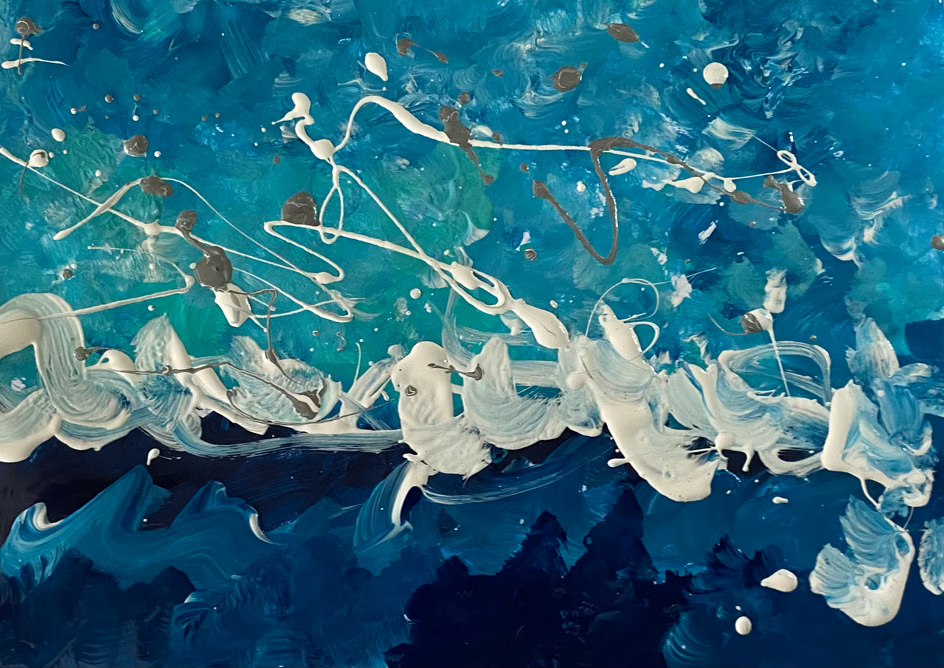
One of the most powerful arts integration activities I have used is “Painting the Music”, where students respond visually to a piece of music through abstract drawing or painting. Rather than focusing on realistic representation, students listen deeply and translate sound into colour, shape, line and texture.
Start with Emotions
A simple entry point is to ask students:
- What does joy sound like?
- What colour is excitement?
- What shape might fear be?
- How would sadness move across a page?
Before introducing music, students can participate in quick abstract drawing activities where they represent emotions using only lines, colours and shapes. Encourage experimentation:
- Draw an emotion using only dots and lines.
- Create a continuous line drawing without lifting the pen.
- Explore how hard or soft pencil pressure changes with different feelings.
- Compare how colours and forms shift across emotions.
Emotional exploration can also connect to real-world contexts such as friendship, belonging, resilience or environmental concerns. Children’s literature can provide a meaningful foundation. Books such as The Colour Monster by Anna Llenas, Ruby Finds a Worry by Tom Percival or The Huge Bag of Worries by Virginia Ironside can help students build emotional vocabulary before creating their artworks.
Introduce Kandinsky: The Artist Who Saw Music
Russian artist Wassily Kandinsky believed that art and music were deeply connected. Often credited as a pioneer of abstract art, Kandinsky associated colours and shapes with musical sounds and emotions. His paintings have frequently been described as visual representations of music.
Exploring works such as Circles in a Circle (1923) or Yellow-Red-Blue (1925) provides students with examples of how artists communicate ideas without depicting recognisable objects. This helps students understand that abstract art is not about drawing something “correctly”; it is about expressing meaning and feeling.
Wassily Kandinsky — Circles in a Circle, 1923
Prepare Students to Listen
Before students create, slow the pace and encourage active listening.
A simple mindfulness activity can work wonders:
- Sit comfortably and close your eyes.
- Listen carefully for one minute.
- Identify every sound you can hear.
- Share observations as a class.
This helps students tune into the sensory experience of listening and prepares them for deeper engagement with music.
Painting the Music
For the main learning experience, select a piece of evocative music. Ludovico Einaudi’s Ludovico Einaudi – “Elegy for the Arctic” – Official Live (Greenpeace) Elegy for the Arctic is particularly effective because it conveys strong emotions while also connecting to the important issue of climate change.
As students listen for the first time, ask them to simply notice:
- Emotions
- Colours
- Shapes
- Images
- Memories or ideas
Afterward, discuss their responses. You’ll quickly discover that no two students experience the music in exactly the same way.
On the second listening, invite students to create. Encourage them to respond intuitively through abstract marks, colours and forms. There is no expectation of realism. The goal is to communicate what the music makes them feel and think.
Help Students Connect Music and Art Elements
A powerful extension is to explicitly connect the elements of music and visual art:
| Visual Arts | Music |
| Line | Rhythm |
| Shape | Form and Structure |
| Colour | Dynamics and Expression |
| Texture | Timbre and Texture |
| Value | Pitch |
| Form | Musical Form |
When students begin to recognise these relationships, their artistic choices become more intentional. Fast rhythms may inspire sharp, energetic lines. Soft dynamics may lead to gentle colours and flowing shapes. This strengthens understanding in both learning areas simultaneously.
Why This Matters
The most memorable aspect of this activity is often the diversity of student responses. Some students describe feeling calm and reflective, while others notice tension, sadness or urgency. Many naturally connect the music’s emotional qualities to broader issues such as environmental sustainability and climate change.
0 Comments