
Practical Strategies to Create a Positive and Safe Drama Classroom Environment
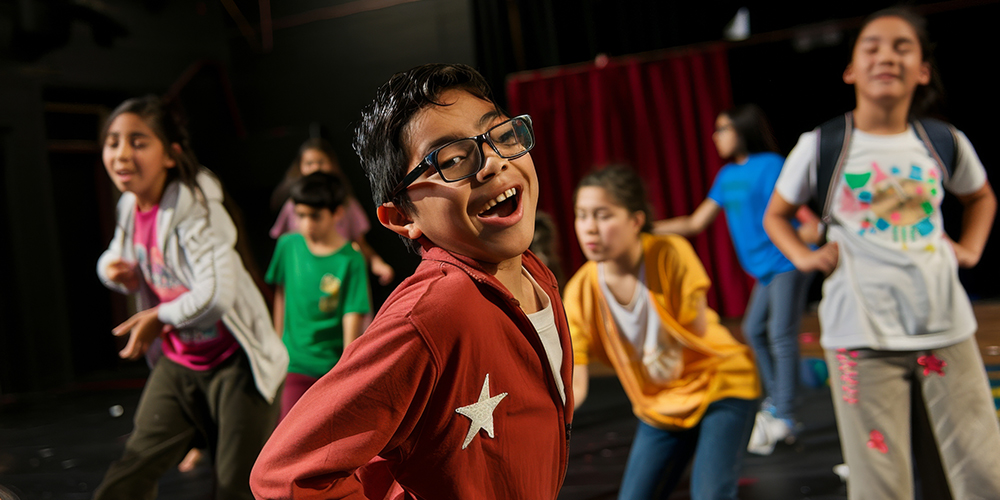
To complement our drama resources, we have developed three practical approaches to help you build a safe, supportive environment where creativity can flourish.
- Establish clear agreements and build them together
- Create clear physical safety protocols and introduce emotional safety tools
- Use warm‑ups to build trust and connection
1. Establish clear agreements and build them together
A safe drama classroom begins with shared agreements rather than top-down rules. Involve students in creating a Drama Contract that outlines how everyone will behave, communicate, and collaborate. Students are more likely to follow expectations they helped create. It also reinforces that safety is a collective responsibility.
Strategies:
- Start with a collaborative conversation: “What do we need from each other to feel safe when trying new ideas?” This opens a discussion, and students often identify behaviours like kindness, patience, encouragement, and respect.
- Giving students ownership emphasises safety as a shared responsibility, not just rules. As students share ideas, write them down to validate contributions and create a collective agreement. Suggestions include listening, encouragement, not laughing, taking turns, respecting space, using positive language, and being open to ideas.
- Make this agreement visible in the drama space and revisit it regularly to add or refine ideas. Teacher modelling sets the tone, encouraging students to adopt these behaviours.
2. Create clear physical safety protocols and introduce emotional safety tools
Drama involves movement, so physical safety must be explicit and consistent. Predictable routines help students feel secure and prevent accidents during energetic activities.
Strategies for physical safety:
- Establish a “safe space” boundary in the room using cones, tape, or verbal cues.
- Teach students to move with awareness: no running, no pushing, and always keep personal space (“bubble space”), eyes up and scanning the room, controlled, purposeful movements.
- Begin each lesson by inviting students to walk the perimeter of the space. This simple ritual reinforces spatial awareness and signals that the drama session has begun.
- Use the phrase “Freeze and Focus” as a quick reset tool.
Strategies for emotional safety:
- In-Role / Out-of-Role Signals: A simple gesture (e.g., hands on head) to show when students are stepping out of character.
- Red-Yellow-Green light: Before activities involving touch, group members communicate comfort levels. For example, saying “green light” (okay), “red light” (not okay), or “yellow light” (discuss further). See the Finding Friends in Unexpected Places unit for examples.
- Tap Out Technique: Students tap their shoulder to indicate a need for a break.
- Reflection Circles: Post-activity discussions where students share feelings and reflections, such as challenges, contributions, and insights.
3. Use warm‑ups to build trust and connection
Warm-ups prepare the body and voice, foster comfort and emotional tone, facilitate transition into a creative space, and build trust for dramatic work. They encourage cooperation, eye contact, and focus, reduce anxiety, build rapport, and promote ensemble for safe drama.
Strategies:
- Mirror Movement: Students work in pairs, taking turns leading slow, controlled movements while their partner mirrors them. This builds trust and nonverbal communication. It encourages students to slow down and become aware of others. It also reinforces the idea of shared responsibility in drama.
- Pass the Energy: Students stand in a circle and pass a gesture, sound, or movement around the group. This activity strengthens group cohesion as it requires focus, timing, and awareness. It also helps students to feel part of a collective creative flow.
- Walk and Stop: Students walk around the space, responding instantly to cues such as “stop,” “go,” “jump,” or “freeze.” This teaches spatial awareness and reinforces listening and quick focus It also helps students understand boundaries and movement control.
- Group Counting (20): Students count aloud from 1 to 20, but only one person can speak at a time. If two people speak at the same time, the group restarts. This activity builds patience and shared focus. It also encourages students to read group energy and timing and strengthens nonverbal communication.
- See more warm-ups in the units of work in our Drama Resources Library.
Creating a safe, positive drama classroom is all about routines, shared agreements, and leading by example. When students feel emotionally and physically secure, they are more willing to take risks, collaborate, and express themselves confidently. A strong safety plan helps create an environment where exploration is fun, empowering, and truly transformative.
We hope you enjoyed reading today’s blog. We’d love to hear your tips and experiences in the comments below.
Resources
- Be sure to check out Setting up for Drama Activities for Finding Friends in Unexpected Places for other useful tips to set up protocols for the concepts of boundaries, consent, and trust in your drama class.
- Visit our Drama Resources Library for free units of work and consider signing up to join our writing and teaching circles.
0 Comments