
Welcome to the Integrated Arts Resources
Scroll down to find out more about Integrated Arts. You’ll also find units of work and resources to support your teaching. Each unit has been developed and taught by circle members.
Become part of the Integrated Arts Circle by teaching one of the units and sharing your experiences.
What is Arts integration?
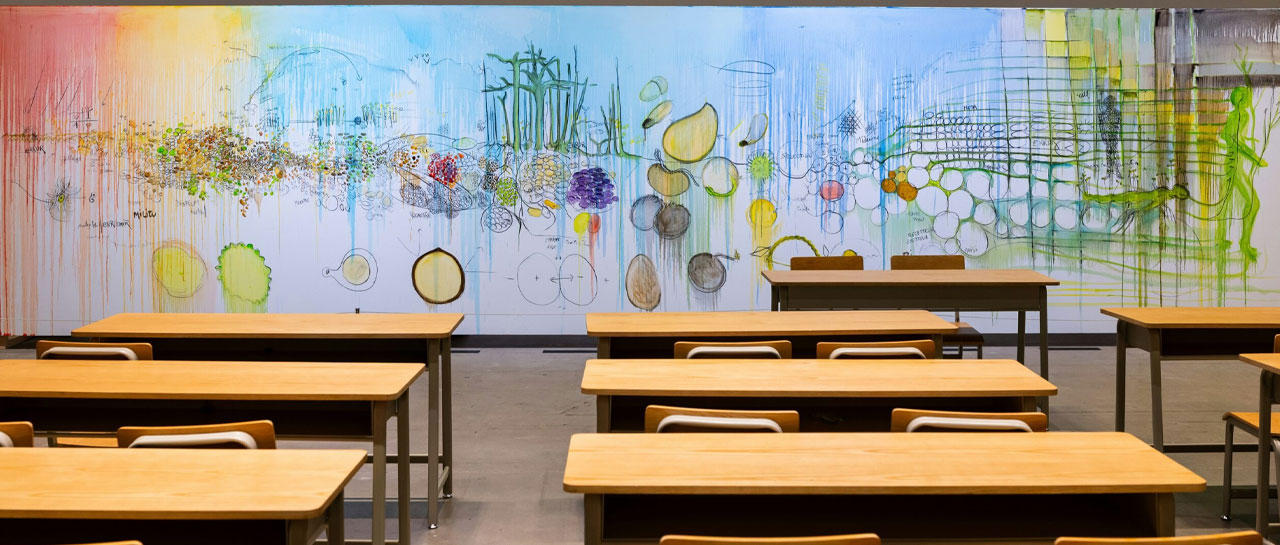
Arts integration involves embedding the arts across different areas of learning, enriching education with creativity and imagination. Arts integration means weaving the arts into other subject areas so that learning is not siloed but interconnected. Instead of treating the arts as “extras,” they become powerful tools for exploring literacy, numeracy, science, history, and beyond. When disciplines are connected in this way, students are encouraged to see concepts from new perspectives and engage through varied learning modalities. This makes knowledge more meaningful, connected, and accessible to a wider range of learners.
This cross‑disciplinary approach also nurtures essential 21st‑century skills such as creativity, adaptability, and multimodal literacy. In a world that increasingly communicates through visual, auditory, musical, spatial, and kinaesthetic forms, these skills are vital for preparing students to thrive in diverse contexts.
Why it matters
When the arts are authentically integrated, students do not just learn facts—they learn to think critically, collaborate, and express themselves creatively. Arts integration can also serve a practical purpose. In crowded curricula, it provides opportunities to link subjects together through arts‑rich projects, creating coherence across learning while maintaining depth and engagement.
Benefits for Students
- Deepens understanding: Students engage with concepts from multiple angles — visual, musical, kinesthetic — which enhances comprehension and retention.’
- Encourages creativity: Cross-disciplinary learning nurtures imagination and problem‑solving skills essential for the 21st century.
- Supports diverse learners: Arts integration taps into varied learning modalities, giving students multiple entry points to express and understand ideas.
- Builds multimodal literacies: In a world of visual, digital, and spatial communication, students learn to interpret and create across different forms.
- Connects curriculum: Arts‑rich projects can make crowded curricula more cohesive by linking subjects meaningfully.

Integrated Arts Resources Coming Soon
The Creative Arts Circles Team is currently building the collection. Integrated Arts Resources will be published here soon.Are you teaching Integrated Arts in your classroom? Join our Teaching or Writing Circles to contribute Integrated Arts Resources to the...