
Walk a Mile in My Shoes: First Fleet and Early Colonial Australia
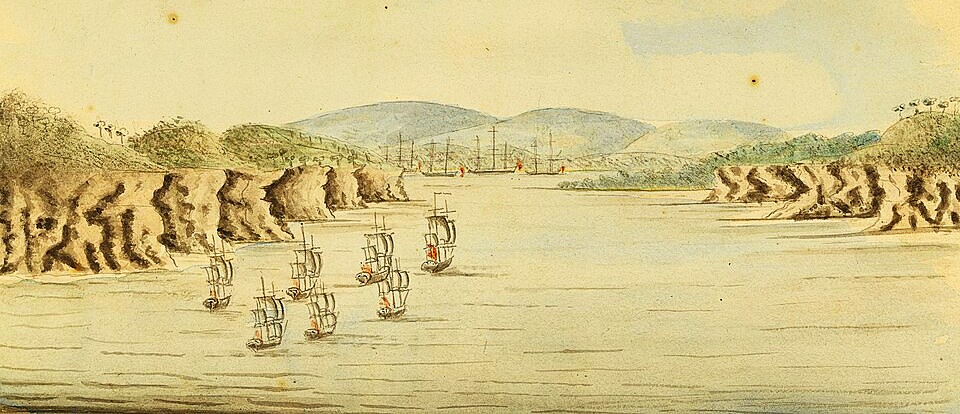
Context
Integrated Drama and HASS (Humanities and Social Studies) Unit for Upper Primary and Junior Secondary classes.
Duration
10 Weeks
Unit description
Students will share their understanding of the different perspectives, experiences, and motivations of key roles in Australia’s early colonies through a group-devised dramatic performance that retells key moments in the history of colonisation. Throughout the unit, they will develop rich, multifaceted, and empathetic understandings of this period in history from different perspectives, including those of First Nations peoples.
What students will do and learn
By the end of this unit, students will:
- Understand early colonisation: Explain the economic, political and social causes of British settlement in Australia after 1800.
- Explore historical perspectives: Identify and describe the experiences and motivations of different groups, including convicts, officers, settlers and First Nations peoples.
- Develop inquiry skills: Formulate historical questions, locate and evaluate sources, and use evidence to draw conclusions.
- Use drama to communicate meaning: Devise and perform a short dramatic scene that conveys ideas and perspectives from early colonisation.
- Collaborate creatively: Work effectively in groups to plan, rehearse and perform drama that demonstrates empathy and understanding.
- Reflect on learning: Evaluate how drama helped you understand historical events and perspectives.
Connect disciplines: Recognise how integrating HASS and Drama deepens understanding through inquiry, creativity and multimodal expression.
Connections
Add Connections Here – eg. Literacy; Numeracy; Digital Literacy; Critical and Creative Thinking; Personal and Social Capabilities; Intercultural Understanding and Ethical Understanding.
Assessment
Students explore life in early colonial Australia through the novel Tom Appleby: Convict Boy and other historical sources. They develop an understanding of the experiences and perspectives of convicts, settlers, government officials and First Nations Peoples during the First Fleet and early colonisation. To demonstrate their learning, students complete a Drama Task and a HASS Task, showing their understanding of key events, perspectives and experiences from this period of Australian history.
Drama Task
Students work in a small group to create and perform a short drama scene that retells important moment(s) from the First Fleet or early colonisation. The performance should show the thoughts, feelings and experiences of different people. After performing, students will complete a short reflection explaining their choices and what you learned.
HASS Task
Students investigate the early British colonies in Australia and explore the different perspectives, experiences and motivations of people living at the time. Students use notes from class and historical sources to write an information report.
Additional applications
- Research and inquiry skills through investigating historical sources.
- Reading and comprehension skills.
- Writing skills through note-taking and report writing.
- Communication skills through sharing ideas and presenting findings.
- Speaking and listening skills through discussion, collaboration and performance.
- Creative thinking skills through developing characters and dramatic scenes.
- Collaboration skills through working effectively in groups.
- Critical thinking skills through analysing evidence and different perspectives.
- Empathy and perspective-taking through exploring the experiences of people in early colonial Australia.
- Reflection skills through evaluating their learning and performance choices.
Unit Authors
This unit was created by:
Marthy Watson
Resources
Download the Unit
Additional Resources
Resources
Research
Did you teach this unit?
Support the Creative Arts Circles Research Project by completing the Teachers Survey, and contribute your expertise and experience to our research project.
0 Comments