
Why movement matters in your classroom
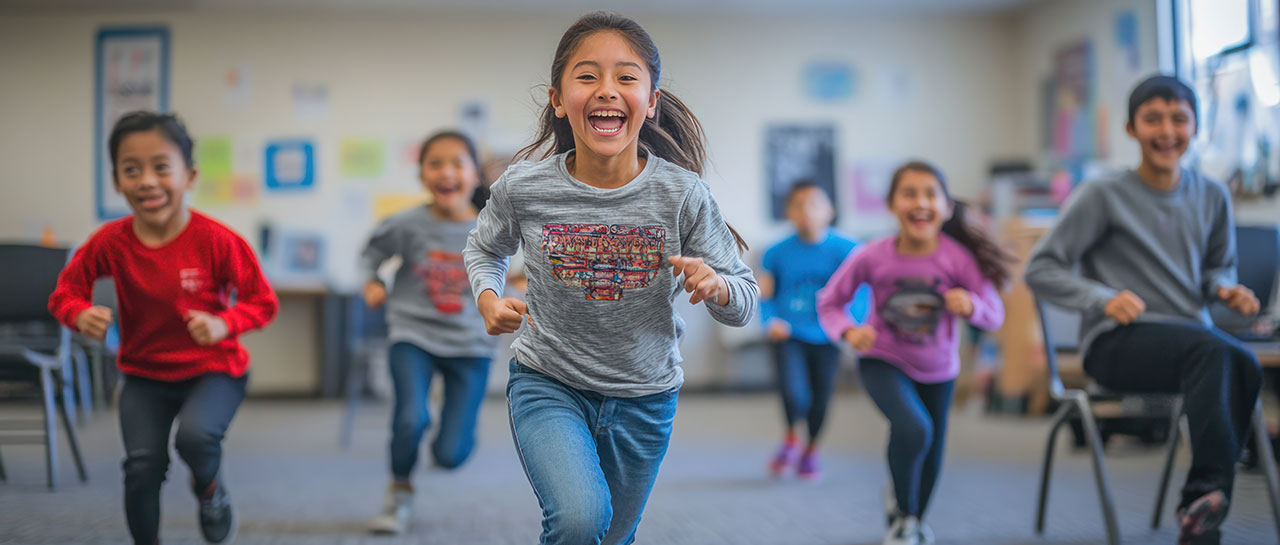
As students engage with dance, they learn to make meaning through their bodies, transforming thoughts, experiences, and narratives into creative movement. Dance encourages curiosity, problem-solving, collaboration, and reflection, helping children develop both personally and socially.
To support students in creating and understanding dance, we explore the elements of dance. These elements provide a framework for understanding how movement communicates ideas, emotions, and stories. By investigating space, time, dynamics, relationships, and action, students learn how dancers make purposeful choices and structure movement to create meaning.
Introducing the elements of dance early in a learning sequence gives students a strong foundation for creative exploration, choreography, discussion, and performance. As they experiment with each element, students develop the skills and confidence to create expressive dances that communicate their unique ideas and experiences.
| Elements | What It Means | Key Ideas and Examples |
| Action -What? | Action describes what the body is doing. These are the movements the dancer performs. | Actions include locomotor movements (travelling, such as walking, sliding, skipping) and non‑locomotor movements (on the spot, such as bending, stretching, twisting). Students might jump, turn, gesture, freeze, or roll to communicate ideas. |
| Space – Where? | Space is about where the body moves. It includes the dancer’s use of the performance area, the shapes they make, the pathways they travel, and the way they relate to other dancers or objects. | Space in dance refers to where and how the body moves, including levels (high, medium, low), directions, pathways, shapes, personal and general space, size of movement, focus, and proximity to others. Dancers use space to create meaning — for example, moving in curved pathways to show softness, using high levels to show energy, or shifting between personal and general space to show growth or change. |
| Time – When? | Time refers to when the movement happens and its rhythm or speed. | This includes tempo (fast, slow), duration (short, long), beat, rhythm, and timing. Students explore moving quickly like a bird, slowly like a seed growing, or following a steady beat in music. |
| Energy / Dynamics -How? | Dynamics describe how the movement is performed and the quality or energy behind it. | Movements can be sharp, smooth, heavy, light, flowing, or sudden. Students experiment with contrasting qualities, such as floating versus stomping, or gentle swaying versus explosive jumps, to express different moods or ideas. |
| Relationship | This element describes how dancers connect with one another and with objects or the space around them | Key ideas include working in pairs or groups, mirroring, matching, leading and following, moving in unison or contrast, and using formations such as circles, lines, or clusters. E.g. include two dancers mirroring shapes, a group creating a connected sculpture, or partners travelling together in a follow‑the‑leader pathway. |
Get Involved
Are you teaching Dance in your classroom? Join our Teaching or Writing Circles to contribute Dance Resources to the collection!
0 Comments